
Iron-On vs Sew-On Patches: When to Use Which

Patchin Fashion is published by Paddy's Patches. Links to Paddy's products are our own products.
The iron on vs sew on patches question sounds simple, and then you are standing there with a patch in one hand and your favorite jacket in the other, wondering which mistake you are about to make. Good news: there is no universal winner. There is only the right backing for your fabric, your wear level, and how much effort you honestly want to put in. Here is how we decide at the shop, with zero sewing snobbery either way.
What's the actual difference between iron-on and sew-on patches?
An iron-on patch has a heat activated glue layer on the back. You position it, press it with a hot iron, and the glue bonds to the fabric as it cools. Ten minutes, no needle, done.
A sew-on patch has a plain fabric back. You attach it with stitches around the border, by hand or with a machine, and thread does all the holding.
Here is the part most people miss: a lot of patches are both. Dual backing patches, like our Corgi Embroidered Patch, Iron On or Sew On, have the glue layer and a stitchable border, so you can iron them on, sew them on, or iron first and stitch for insurance. When a product title says "Iron On or Sew On," that choice is yours.
When iron-on patches win
Speed and zero skills. If you cannot sew, do not want to learn tonight, or need a costume fixed before a party, iron-on is your friend. Kids' jackets, event tees, last minute everything.
Smooth, heat friendly fabrics. Cotton, denim, and canvas take heat well and give the glue a flat surface to grab. A patch ironed onto the chest of a denim jacket and left to cool properly is on there for years of normal wear.
Testing a layout. Not sure where a patch belongs? Iron-on lets you commit one patch at a time and build a jacket front gradually, which is how most good patch jackets actually happen.
Multi-patch projects. Doing five patches in an afternoon is realistic with an iron. The Butterfly Embroidered Patch 5-Pack, Iron On or Sew On is built for exactly this, a whole sleeve or jacket front in one sitting.

When sew-on patches win
Leather, always. Never put a hot iron on leather. It scorches, it cracks, and the glue will not bond to the surface anyway. Vests and leather jackets get stitches, full stop. This is also why classic biker and vintage styles lean sew-on.
Heat sensitive fabrics. Thin polyester, nylon, rayon, anything with a plastic coating or waterproof finish. If the fabric would melt, wrinkle weirdly, or shrug off glue, sew it or skip the garment.
High wear and high flex spots. Backpack straps, elbows, knees, workwear, anything that bends, rubs, and gets washed hard. Thread flexes with fabric. Glue is stiffer, and repeated bending is what eventually lifts an iron-on edge.
Big and heavy patches. A large back patch has a lot of edge for life to catch on. Our Extra Large Eagle Embroidered Patch, 15 Inch, Iron On irons on fine, but for a jacket you wear constantly, we recommend stitching the border after ironing. Ten extra minutes, years of extra hold.
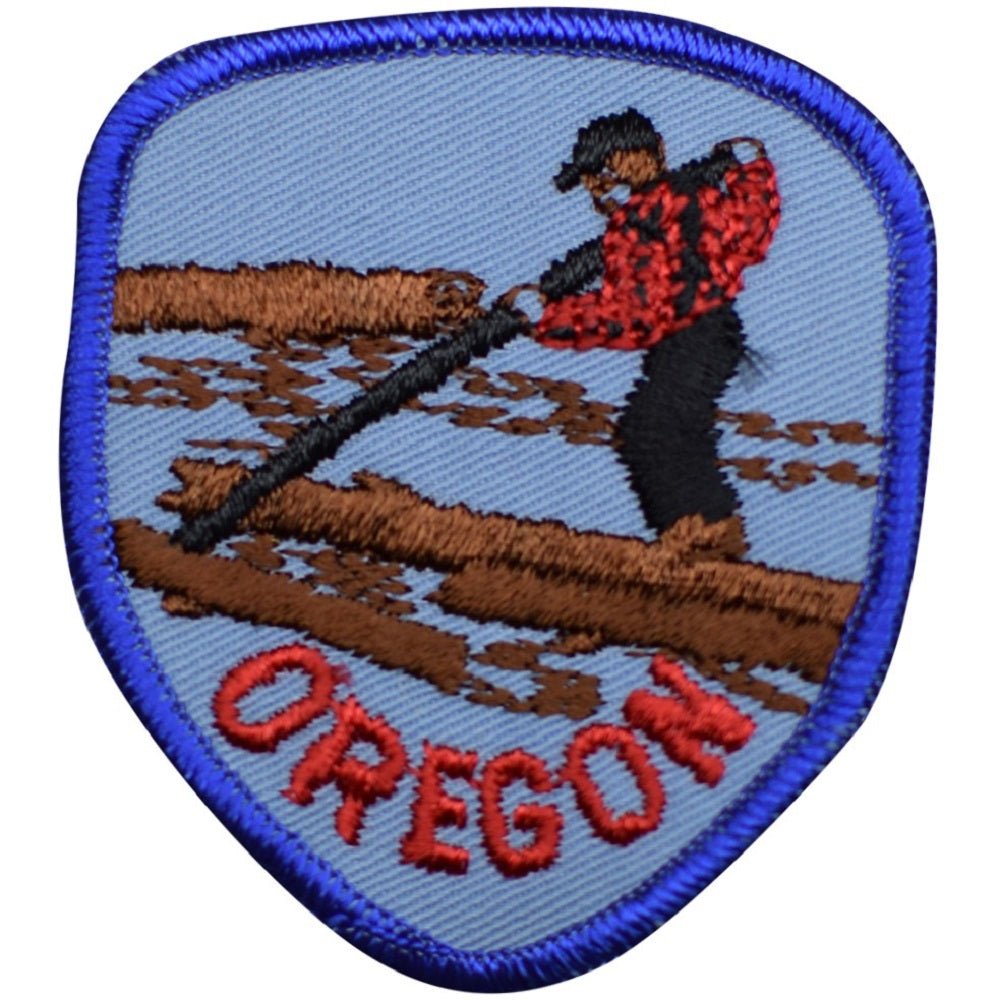
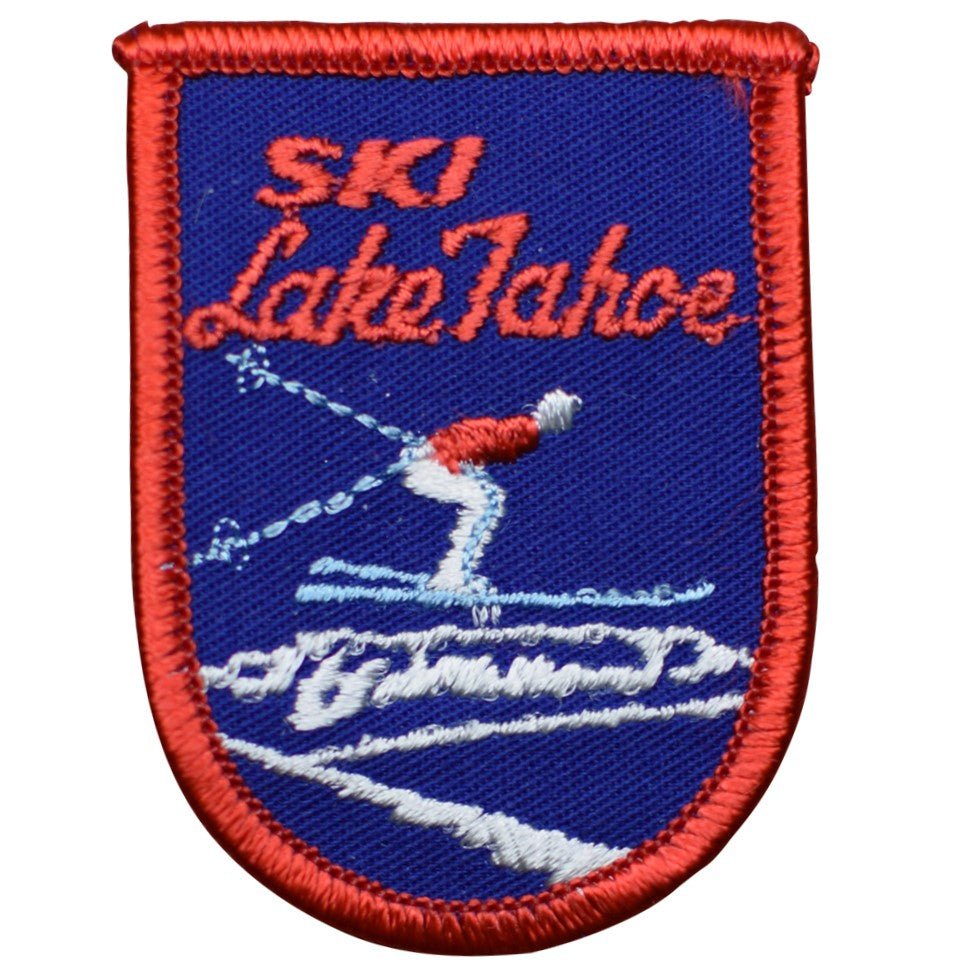
Vintage and collectible patches. True sew-on patches still exist, especially vintage travel designs like the Vintage Oregon Embroidered Patch, Sew On and the Vintage Lake Tahoe Embroidered Patch, Sew On. No glue layer at all, just stitch them the way they were attached fifty years ago. It suits them.
The decision table we actually use
| Fabric or item | Wear level | Best choice |
|---|---|---|
| Denim or canvas jacket | Everyday wear | Iron-on (stitch big patches) |
| Cotton tee or hoodie | Light to normal | Iron-on |
| Leather vest or jacket | Any | Sew-on only |
| Backpack or workwear | Heavy, high flex | Sew-on, or iron plus stitch |
| Thin polyester, nylon, coated fabric | Any | Sew-on (test first) |
| Kids' clothes and costumes | One season | Iron-on |
| Vintage sew-on patch | Any | Sew-on |
| Extra large back patch | Everyday wear | Iron-on plus stitched border |
The pro move: iron it, then stitch it
If you take one tip from this whole post, take this one. Iron the patch on first. The glue holds it exactly in place, no pins, no slipping, no crooked patch regret. Then run a simple stitch around the border, by hand is fine, through the patch edge and the fabric. You get the speed and placement of iron-on with the long term hold of sew-on. Most patches in our own shop samples are done this way, and dual backing patches are made for it.
Getting the iron-on half right
If you are going the iron-on route, the backing is only half the story. Heat, pressure, and cooling time decide whether it lasts. Our full walkthrough, with temperatures and times by fabric, is here: How to Iron On a Patch Without Ruining It. Read it before your first iron, not after your first peel.
Browse both backing types in all embroidered patches at Paddy's Patches, and check the product title. If it says iron on, sew on, or both, that is exactly what the backing does.
FAQ
Can you sew an iron-on patch?
Yes. The glue layer does not block a needle, and stitching an iron-on patch is the strongest attachment method there is. For thick glue layers, use a sturdy needle and push from the border, not the center.
Are iron-on patches permanent?
On the right fabric, applied with enough heat and pressure and cooled fully, iron-on is effectively permanent for normal wear. Edges can lift after years of hot washes and heavy flexing, and a few stitches fix that in minutes.
Can you iron a patch onto leather?
No. Heat damages leather and the glue will not bond to it properly. Sew-on is the only good option for leather jackets and vests.
Do sew-on patches last longer than iron-on patches?
They can, especially on high flex, high wear items like backpacks and workwear, because thread moves with the fabric. On a denim jacket worn normally, a well applied iron-on patch lasts for years too.
What if a patch does not say which backing it has?
Check the product title and description. Ours state it plainly, iron on, sew on, or iron on or sew on for dual backing. If a listing anywhere is unclear, flip the patch over: a shiny, smooth back is heat glue, a plain fabric back is sew-on.
Pick the backing that matches your fabric and your patience, and the patch will outlast the jacket debate. Patch first, argue never.
Patchin Fashion is published by Paddy's Patches. Links to Paddy's products are our own products. Shop all embroidered iron-on patches at paddyspatches.com/collections/patches.


